







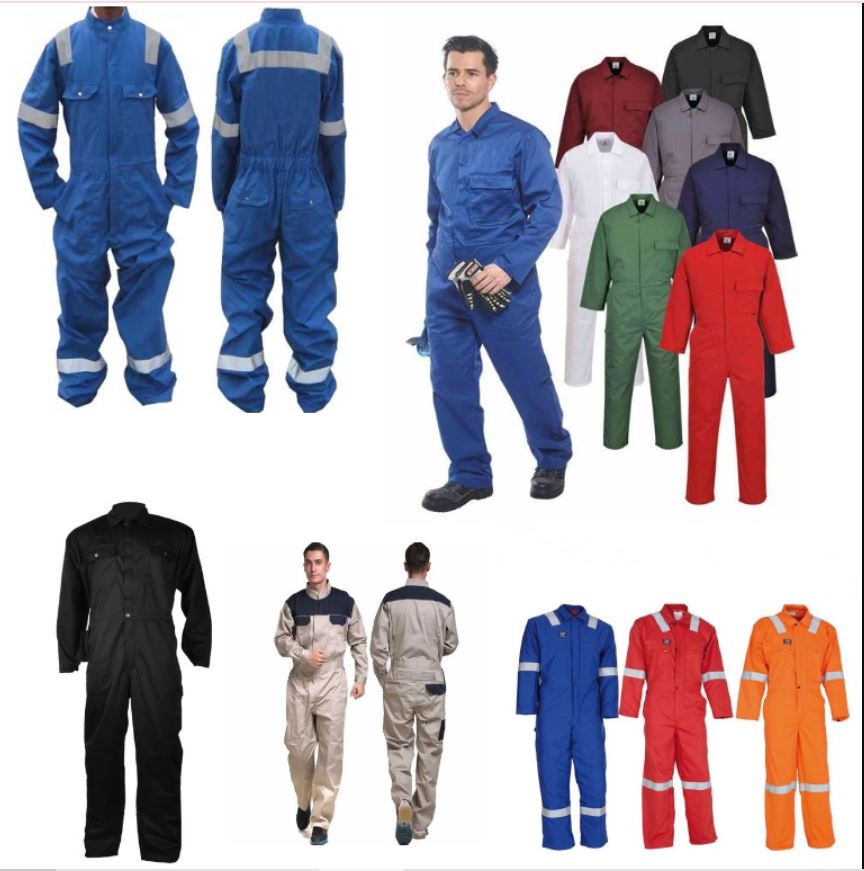

There is something timeless about a great pair of coveralls. Maybe it is the clean, uninterrupted lines. Maybe it is the way they instantly communicate that I am here to work. Or maybe it is because, in a world of mix-and-match uniforms, the coverall quietly solves problems most people do not even know they have. Whatever the reason, coveralls remain one of the most functional, dependable, and surprisingly modern garments in the workwear universe.
Coveralls were designed with a simple purpose: protect the wearer from neck to ankle in one clean sweep. No waistbands shifting. No shirts pulling loose. There is no gap between tops and bottoms. Just pure, uninterrupted protection.
For industries where dirt, grease, and chemicals are part of the daily environment such as auto technicians, industrial maintenance crews, utilities teams, aviation ground staff, logistics workers, and heavy equipment operators, full-body coverage truly matters. Every seam and closure serves a purpose. Coveralls minimize exposed skin, reduce snag points, and help keep contaminants off both the wearer and the garments underneath.
They are also a major win for safety teams: fewer layers to manage, fewer opportunities for improper wear, and a consistent silhouette that ensures compliance.
Employees save time getting dressed, especially in high-turnover or shift-based environments. There is no second-guessing whether the shirt matches the pants or if the right weight is being worn. One garment, one decision, done.
Facilities that use rental laundry or internal laundry operations also benefit from the simplicity. Instead of tracking two SKUs per associate (tops and bottoms), coveralls consolidate SKUs, reduce sortation time, and streamline bundling. Inventory forecasting becomes easier. Replenishment becomes easier. Even repairs become easier because you know exactly where the stress zones will be.
Modern coveralls have evolved in ways that surprise people who still picture stiff poly-cotton twill from decades past.
Fabric innovation has transformed the category. Stretch woven blends offer ease of movement. Lightweight ripstops improve durability without bulk. Moisture-management yarns help with heat buildup, a major benefit for technicians working in warm climates or near machinery.
Construction has leveled up too. Articulated knees, seat gussets for mobility, reinforced stress points, and venting systems are becoming standard across higher-end programs. Add in zippered pockets, tool loops, reflective trims, and gender-specific fits and suddenly the coverall is less “retro mechanic” and more “purpose-built PPE.”
Coveralls offer something many uniforms struggle with a clean canvas. The uninterrupted front and back panels make logo placement incredibly effective. Whether you are embroidering a left chest emblem, adding a heat-seal back graphic, or layering reflective ID tape for utilities, the garment becomes a moving billboard for your brand. The look is cohesive, polished, and immediately recognizable.
The bottom line? Coveralls work because they remove friction from the uniform experience. They blend safety, comfort, branding, and operational simplicity into one garment that has proven its value for decades.
In a market full of trendy silhouettes and high-tech textiles, coveralls remain the quiet achiever. They are not flashy. They are not new. But they are durable, protective, smart, and reliably uniform, everything a great workwear system should be.